
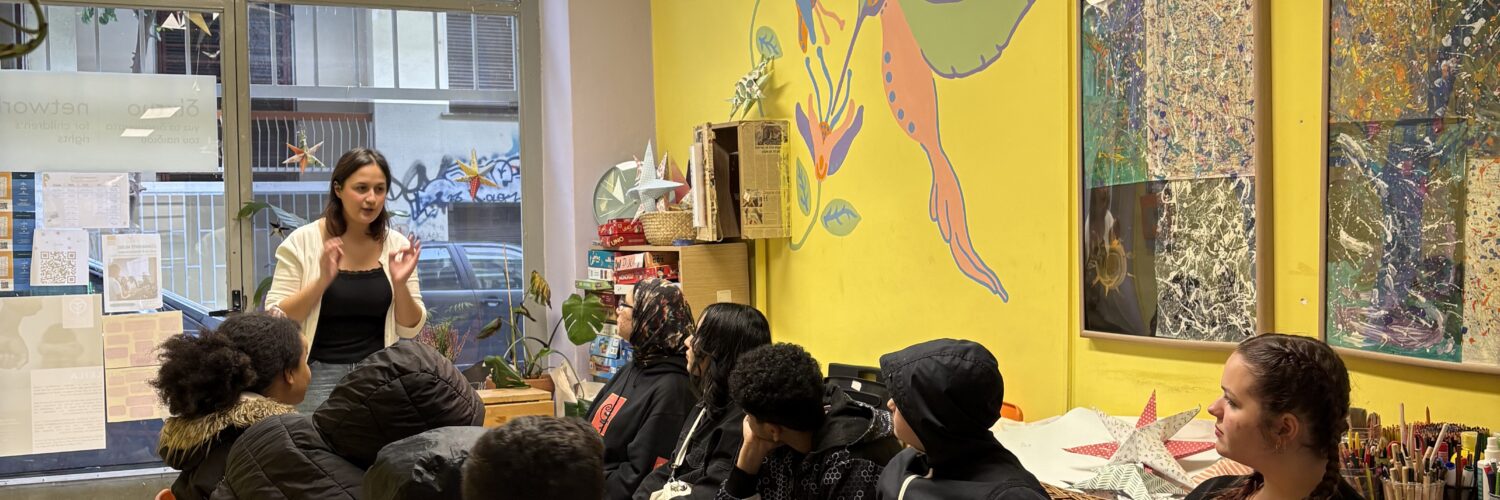
 As part of the “Migratory Birds” workshop of the Youth Network of the Network for Children’s Rights, we conducted an interview with Pelopidas–Alexios Nikolopoulos, lawyer and Advocacy Officer of the organization. With a law degree from the National and Kapodistrian University of Athens and a thesis focusing on guardianship for unaccompanied children, Mr. Nikolopoulos has extensive experience in children’s rights, particularly in the protection of unaccompanied minors, having supported them for years through legal procedures.
During our discussion, he explained what the term “unaccompanied minor” means. It refers to children who are in a country without their parents or a legal guardian. There are also children who travel with relatives, but without formal custody; these are considered separated from their families and are also included in the broader category of unaccompanied children.
In recent years, most unaccompanied children arriving in Greece have mainly come from Egypt, followed by countries such as Afghanistan and Sudan. However, as Mr. Nikolopoulos pointed out, countries of origin change depending on global conditions.
The challenges these children face are numerous and begin the moment they arrive. According to Mr. Nikolopoulos, the most significant issue is the lack of information: they do not know the language, their rights, or where to seek help. This creates a strong sense of insecurity and isolation.
The Network for Children’s Rights, together with other organizations, plays a key role in supporting them. Through its Child Protection Unit*, staffed by specialized professionals such as psychologists, social workers, lawyers, and interpreters, children receive information, psychosocial and legal support, and assistance in their daily lives. At the same time, through mobile units and street work, the organization identifies children in need and accompanies them to safe accommodation facilities.
Unaccompanied children have the same rights as all children in Greece. These include the right to education, healthcare, housing, and recreation. However, in practice, accessing these rights is not always easy, as bureaucratic barriers and social prejudice often exist.
One of the most important issues highlighted is the integration of these children into society. School is a key space for socialization, but language barriers and social attitudes can make it difficult to build relationships. As Mr. Nikolopoulos emphasizes, it is important to try to understand each child’s story. Many of them have experienced war, loss, and hardship, which inevitably affects their behavior.
*Within the framework of the project “Strengthening the protection systems for Unaccompanied Migrant children and vulnerable women applicants and beneficiaries of international protection residing in Greece” the Network for Children’s Rights operates the Child Protection Unit. The project is implemented under the coordination of the International Organization for Migration (IOM) Greece, in collaboration with other partners and the General Secretariat for Vulnerable Persons and Institutional Protection of the Ministry of Migration and Asylum. The action is funded by the National Development Program (2021–2025) through the Special Service for the Coordination and Management of Migration and Home Affairs Programs of the Ministry of Migration and Asylum.
Read the full interview below:
What does “unaccompanied minor” mean?
P.N.: An unaccompanied minor is a child who is in a country without their parents or a legal guardian. This is not a personal definition—it is established by law, both at the European level and in Greece.
There is also the category of children separated from their families. These children may travel with relatives, such as uncles or grandparents, but not with someone who has legal responsibility for them.
Which countries do these children usually come from?
P.N.: Countries of origin change over time. In recent years, most unaccompanied children have come from Egypt (over 60%), as well as Afghanistan and Sudan. In the past, more children came from Syria, Pakistan, or Bangladesh.
What difficulties do they face when they arrive in Greece?
P.N.: The biggest difficulty is that they do not know anyone and are unaware of their rights. They do not speak the language and struggle to communicate or ask for help. This creates a strong sense of insecurity.
How do you support these children through your work?
P.N.: The Network for Children’s Rights, together with other organizations, plays an important role. Through the Child Protection Unit, which includes psychologists, social workers, lawyers, and interpreters, we provide information, psychosocial and legal support, and help with everyday needs.
At the same time, through mobile units and street work, we identify children in need and accompany them to safe accommodation facilities.
We help children to:
• understand their rights
• find safe housing (shelters)
• access healthcare and education
We also operate:
• support offices for scheduled appointments
• mobile units that locate and assist children on the streets
In addition, in my role as Advocacy Officer, I participate in processes aimed at protecting and promoting these children’s rights.
What rights do unaccompanied children have?
P.N.: They have the same rights as all children in Greece, including:
• education
• healthcare
• housing
• food
• recreation
They can enroll in school even without all required documents, although in practice there are challenges.
Is it easy for them to integrate into school and make friends?
P.N.: Not always. There are difficulties related to:
• language
• social acceptance
• bureaucracy
Many children form friendships mainly with people who speak their language. However, school is very important, as it supports integration.
Why do some children display aggressive behavior?
P.N.: There is no single answer. Many of these children have experienced very difficult situations, such as war or the loss of family. They may have been forced to grow up very quickly.
We do not justify the behavior, but we try to understand it through each child’s story.
What is the most important thing a child needs when arriving in a new country?
P.N.: Children themselves tell us two key things:
- Safety – not to be in danger and to have a place to stay
- Legal status – to be able to live without fear
 Is there a story that has stayed with you?
P.N.: I remember a 14-year-old child from Afghanistan. We supported him through all procedures; he attended school and learned Greek. Despite the difficulties, he kept trying. When he was finally granted asylum, it was a very emotional moment, because he could finally build his life in safety.
What would you like young people in Greece to understand?
P.N.: It is very important to have these discussions. Through them, we can better understand these children and overcome stereotypes.
Unaccompanied children are not “something foreign”—they are children with rights and potential.





Add comment